

There is a particular kind of lawn that looks acceptable from the street. Walk onto it and the story changes – thin patches where weeds have settled in without resistance, a surface that gives slightly underfoot from unaddressed thatch, edges that communicate sporadic attention rather than any real consistency. None of it is bad luck or poor soil. It is what happens when lawn care focuses on how things look rather than what is actually occurring a few centimetres below the surface. Lawn maintenance that works starts there, not at grass level.
Mowing Height Is a Root Decision
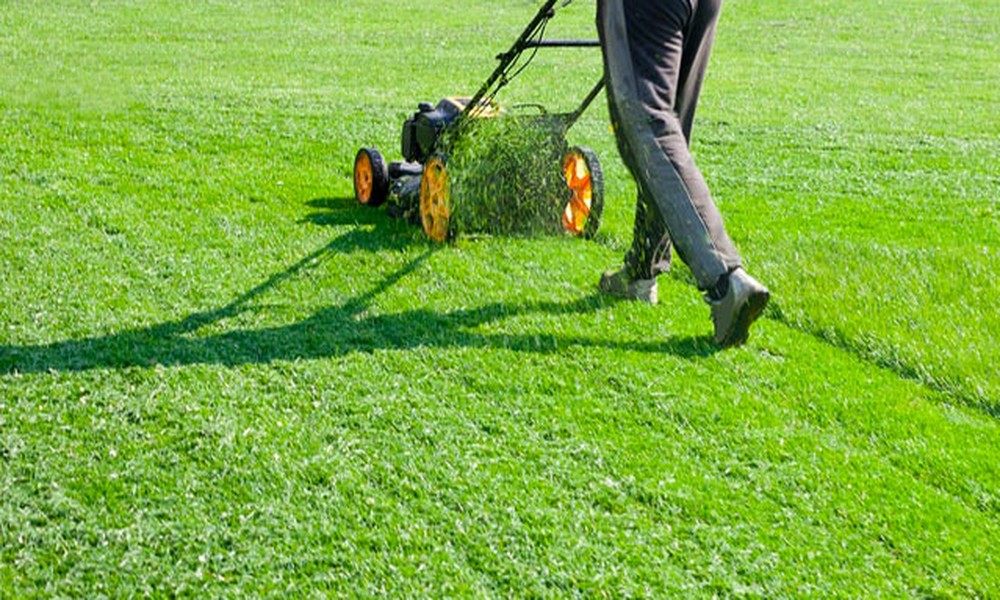
Mowing produces a tidy surface. That part is visible. What is not visible is whether the root system just got stronger or quietly weaker, depending on how the cut was made. Remove too much leaf and the plant cannot photosynthesise properly – it pulls from root reserves to recover, and repeated cycles of that produce roots that stay shallow and cannot access moisture once the top soil dries out. Most Australian lawns get cut too short, too regularly. That one habit causes more cumulative damage than almost anything else, and almost nobody connects it back to the mowing.
What Shallow Watering Actually Builds
Brief daily watering feels like diligence. What it actually produces is a root system that stays near the surface, concentrated exactly where soil moisture disappears fastest on a hot day. When a genuinely difficult stretch of heat arrives – and in most Australian climates, it will – those roots have nothing to work with. Deep watering done less frequently changes the entire picture. Roots follow moisture downward into the soil profile. That depth is what builds drought resilience. It cannot be added later with fertiliser or sprayed on after the lawn has already browned out.
Compaction Sits Under Every Other Problem
Lawns that drain poorly, grow patchily, or develop bare areas despite regular watering and feeding are often sitting on compacted soil that nobody has addressed. Compaction restricts how deep roots can travel, limits the oxygen exchange that soil biology depends on, and causes water to run off the surface rather than absorbing where it is needed. Lawn maintenance that includes periodic aeration gets at the actual cause. Without it, water, fertiliser, and topsoil all underperform because the soil underneath cannot receive them properly. Treating the surface while compaction continues below is effort spent in the wrong direction.
Fertilising Without a Soil Test
Nitrogen greens a lawn up quickly. That visible response is why most off-the-shelf fertilisers lead with it heavily, and why it gets applied repeatedly without much thought. But nitrogen applied to soil with a pH that locks out other nutrients, or soil that is genuinely depleted of potassium, produces a lawn that looks temporarily better and functions no differently. A soil test identifies what is actually limiting performance. Fertilising in response to that produces compounding improvement across seasons. Without it, the same short-term flush repeats without building anything durable underneath.
Weeds Are Telling You Something
Weeds do not appear randomly. They establish in conditions that suit them specifically. Bindii favours compacted, low-fertility ground. Clover moves into areas where nitrogen is genuinely absent. Winter grass takes hold wherever turf density is too thin to crowd it out. Lawn maintenance that reads those signals and addresses the underlying condition breaks the cycle. Herbicide applied without that understanding removes the symptom temporarily. The weed returns because the invitation – the condition that allowed it to establish – has not been withdrawn.
Timing Changes What the Work Does
Aeration, scarifying, and fertilising performed during active growth give the lawn the capacity to recover quickly and use the intervention properly. Done during dormancy, the same work produces slow results at best. At worst it causes stress that takes a full growing season to repair. Scheduling intensive maintenance to align with the grass’s active growth window rather than a convenient weekend is one of the decisions that separates lawn care that compounds positively over time from lawn care that simply repeats without improving anything.
Edges Signal Everything
Ragged edges undermine everything else. A lawn that is well mown, properly watered, and clearly cared for still reads as neglected if the edges along garden beds and pathways are overgrown and inconsistent. Clean definition along those boundaries communicates something about the whole property – to visitors, to neighbours, and to anyone looking at it seriously. It takes less time than almost any other maintenance task. Its contribution to overall impression is disproportionate to that effort.
Conclusion
Lawn maintenance that holds up across seasons is built on root behaviour, soil condition, and timing – not surface appearances managed repeatedly without any real understanding underneath them. The lawns that handle Australian heat, recover from wear, and resist weed pressure are not maintained with more products more often. They are maintained with better decisions made at the right moments. That takes no more time than the alternative. It just produces results the alternative never will.