

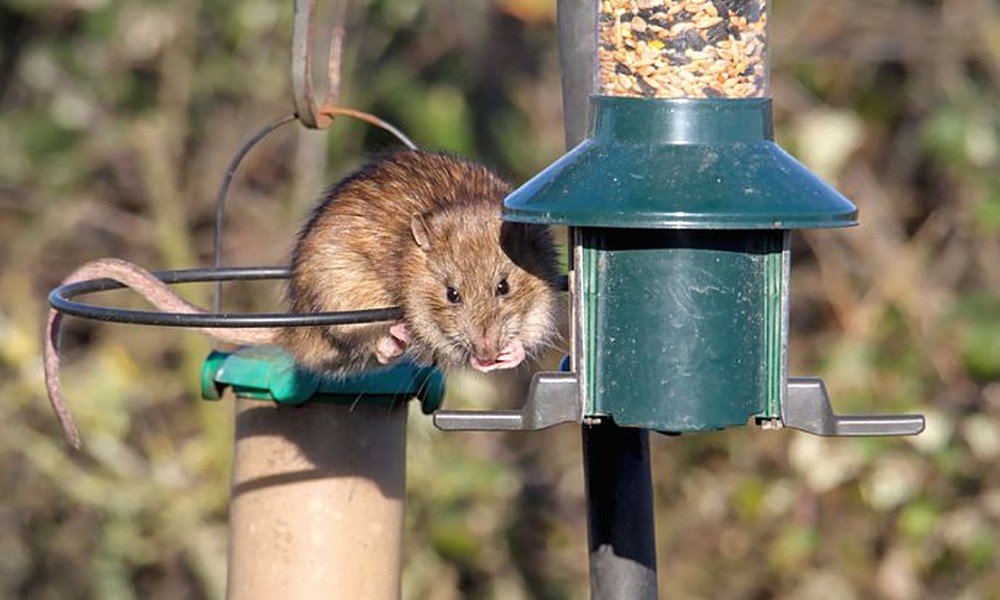
A homeowner in Prairie Village catches mice in the garage every fall, sets traps, and manages the population until it eases in spring. The pattern repeats for three years, with no clear source. On a walk through the neighborhood one afternoon, the same homeowner notices that the house two doors down has four large bird feeders hanging from a backyard deck and a ring of spilled seed spreading out across the lawn beneath each one. The connection finally clicks. Kansas City pest control companies that work rodent jobs routinely, including ZipZap Termite & Pest Control in Lawson, see this pattern repeatedly across residential neighborhoods in the metro. The homeowners with the rodent infestations rarely have the bird feeders. The neighbors who have the feeders rarely have the infestations. The mice and rats go to the food source and then move on to the nearby structures that offer shelter.
The Math of a Typical Backyard Feeder
A single tube feeder holding about two pounds of black oil sunflower seed, filled regularly, can drop a surprising amount of seed on the ground beneath it. Studies and long-running observations from Cornell Lab of Ornithology’s Project FeederWatch and university wildlife extension programs consistently find that between 20 and 50 percent of seed placed in a typical feeder ends up on the ground rather than consumed by birds. That is the bird’s own doing: species like house sparrows, blue jays, and finches sort through the mix, toss rejected kernels, and drop hulls as they feed.
On a feeder that gets refilled twice a week, the lower end of that range still produces roughly five to ten pounds of ground-level spillage per month. A yard with multiple feeders can produce 30 to 50 pounds of ground spillage over the course of a season. That is a substantial, reliable, predictable food source for any small mammal that discovers it.
The rodent species that benefit most are house mice (Mus musculus), deer mice (Peromyscus maniculatus), and both Norway rats (Rattus norvegicus) and roof rats (Rattus rattus) in the neighborhoods where those species have established populations.
Why the Problem Does Not Stay Put
Rodents do not feed where they live. They feed, then travel to a sheltered harborage to nest, raise young, and spend daylight hours. A bird feeder provides calories. It does not provide shelter. The sheltered spaces rodents actually use are located across the property line.
The maximum nightly foraging range for a typical house mouse is about 30 to 50 feet, so mice attracted to a bird feeder find harborage in the structures within that radius. Rats forage farther, with documented ranges of up to 150 feet, which means a single well-stocked feeder can draw rats from a much wider surrounding area.
The result is that the neighboring properties end up hosting the rodent populations that the bird feeder is feeding. Garages, detached sheds, woodpiles stacked against siding, crawl spaces with gaps in the skirting, and any structure with an entry point as small as a dime all become attractive harborage for rodents that are getting their calories from someone else’s yard.
The Feeder Design and Maintenance Changes That Actually Help
Eliminating the feeder entirely is not necessary, and usually not the right conversation to have with a neighbor. Several specific changes reduce ground spillage substantially and limit the rodent attraction without ending the feeding hobby.
Feeder selection matters. Tube feeders with small perches and narrow feeding ports produce far less spillage than open platform feeders, hopper feeders, or trays. Weighted cages that close when a heavy animal lands on them (squirrel-resistant designs) also tend to reduce ground spillage by design.
Seed selection matters as much as feeder selection. Mixed seed with filler species (milo, red millet, oats) produces the most discarded material, because birds reject the filler and drop it immediately. Single-species offerings (black oil sunflower, nyjer, safflower) are more fully consumed. Hulled seed, particularly hulled sunflower chips, produces the least ground debris because there is nothing to reject.
Tray attachments that catch dropped seed before it reaches the ground are widely available, typically priced at $15 to $30, and dramatically reduce the feeder’s ground-level impact.
Feeding schedule changes reduce the year-round attraction. Filling feeders only during the winter months when natural food is scarcest, suspending feeding entirely during the spring and summer, and cleaning the ground under the feeder regularly all limit the continuous food availability that supports established rodent populations.
Storage practices matter outside the feeder itself. Seed stored in a garage or shed in the original bag attracts rodents directly to the storage location and provides an interior food source independent of the feeder. Metal trash cans with tight-fitting lids, or heavy-duty sealed plastic storage, eliminate this secondary attraction.
The Conversation With a Neighbor
A homeowner identifying a neighbor’s feeder as the rodent source has to navigate a conversation that most people find awkward. A few points help.
The neighbor is not doing anything wrong. Bird feeding is a widespread, legal, often cherished activity, and framing the conversation as an accusation rarely produces cooperation.
The framing that usually works is a shared-problem approach. “I’ve been dealing with mice in my garage and a Kansas City pest control tech suggested we check the surrounding yards for attractants. I know you feed birds. Would you be open to trying some of the spillage-reduction techniques she mentioned?” That framing identifies the issue, credits professional diagnosis rather than neighborly suspicion, and asks for a specific, modest change rather than demanding the feeders come down.
Printed information helps. Cornell’s Project FeederWatch, the Audubon Society, and several university wildlife extension programs publish homeowner guides on bird-feeding best practices that include spillage reduction. Sharing one of these with a neighbor is a lower-friction approach than a verbal request.
In neighborhoods with formal HOAs, some associations have adopted rules on bird feeding specifically because of shared pest issues. That is a last-resort conversation rather than an opening move.
When Professional Treatment Is Still Necessary
Even with the bird feeder source reduced, an established rodent population in a neighboring structure does not disappear on its own. The food source change slows recruitment and reduces breeding, but the population already inside the garage or shed needs direct intervention.
A Kansas City pest control provider can map the entry points on the affected property, seal them to exclude further entry, and reduce the existing population through a combination of trapping, tamper-resistant bait stations, and monitoring. The combination of source reduction at the feeder and structural exclusion at the affected property produces durable results that neither approach handles alone.
The Short Version
Bird feeders are one of the most consistent and least-recognized rodent attractants in Kansas City neighborhoods, and the resulting infestations usually appear on properties adjacent to the feeder rather than on the feeder owner’s property itself. Spillage reduction through feeder design, seed selection, catch trays, and seasonal feeding schedules limits the attraction without ending the hobby. For homeowners already dealing with a rodent problem they suspect is neighbor-sourced, a Kansas City pest control provider such as ZipZap Termite & Pest Control can handle the structural exclusion and trapping that the source-reduction conversation alone does not solve.
