

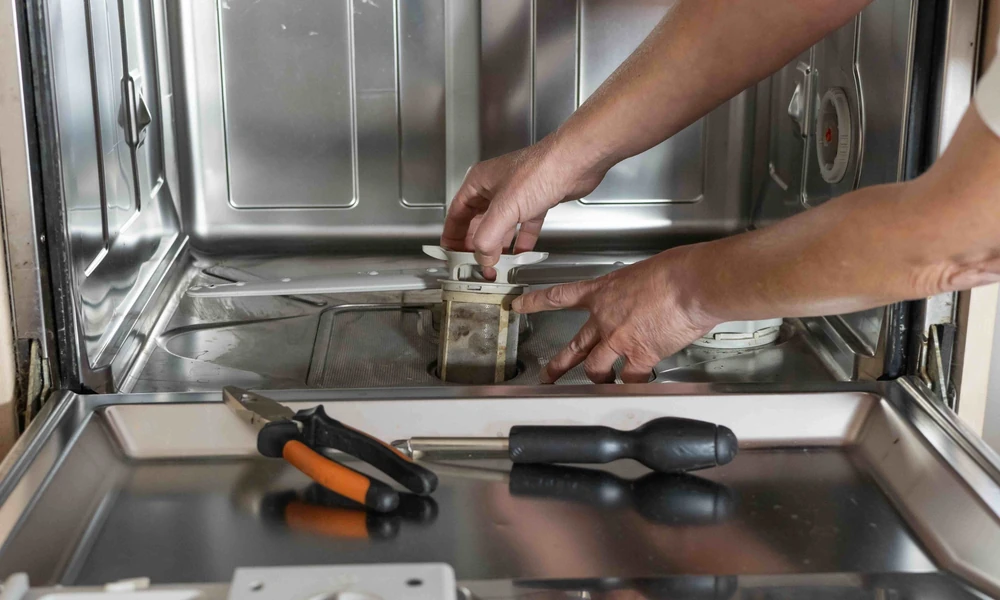
Opening your dishwasher after a wash cycle only to find standing water at the bottom can be frustrating. I know because I experienced it myself a few months ago. After unloading what I thought was a finished cycle, I noticed several inches of dirty water still sitting in the bottom of the dishwasher. At first, I assumed it was a one-time issue and ran another cycle, but the same thing happened again.
After doing a little troubleshooting, I discovered the dishwasher filter was heavily clogged with food debris that had gradually built up over time. Cleaning the filter improved the drainage immediately, but the experience also taught me something important: standing water should never be ignored. What seems like a minor inconvenience can actually be the first warning sign of a developing drainage problem.
A dishwasher is designed to drain dirty water completely after every cycle. When that process is interrupted, dishes may come out dirty, unpleasant odours can develop, and moisture may begin affecting internal components. If the problem is ignored, a simple drainage issue can eventually lead to more expensive repairs or even water damage around the appliance.
Understanding the common causes of dishwasher drainage problems, and knowing when basic maintenance is enough or when professional help is needed, can keep your kitchen running smoothly while extending the life of your dishwasher.
Key Takeaways
- Standing water usually indicates a drainage problem.
- Addressing drainage issues early helps prevent expensive repairs.
- Routine maintenance improves dishwasher performance.
- Proper loading and regular cleaning reduce drainage problems.
- Persistent drainage issues should be professionally diagnosed.
Why Proper Dishwasher Drainage Matters
Every dishwasher is designed to perform three essential tasks: wash, rinse, and drain. When the drainage system isn’t working properly, each of these functions becomes less effective.
Dirty water left inside the appliance can redeposit food particles onto dishes, create unpleasant smells, and place unnecessary strain on pumps and motors. The longer standing water remains inside the dishwasher, the greater the chance that additional components may become affected.
Efficient drainage doesn’t just improve cleaning performance, it also helps protect the appliance from unnecessary wear while reducing the likelihood of recurring problems.
The Most Common Reasons a Dishwasher Won’t Drain
Several different issues can prevent a dishwasher from draining properly. Some are relatively simple maintenance problems, while others involve internal mechanical or electrical components that require professional attention.
Clogged Dishwasher Filter
The dishwasher filter captures food particles and prevents debris from entering the drain system.
Over time, grease, food residue, and mineral deposits can clog the filter, restrict water flow and prevent complete drainage.
Regularly cleaning the filter according to the manufacturer’s instructions helps prevent many common drainage problems.
Blocked Drain Hose
The drain hose carries wastewater from the dishwasher to the household plumbing system.
Food particles, grease, or even a kinked hose can restrict water flow, causing water to remain inside the appliance after the cycle finishes.
Inspecting the hose for visible obstructions can sometimes identify the problem, although removing internal blockages may require professional service.
Faulty Drain Pump
The drain pump pushes wastewater out of the dishwasher during each cycle.
If the pump becomes damaged, obstructed, or begins failing, the dishwasher may leave standing water behind or produce unusual noises while attempting to drain.
Because drain pumps contain electrical and mechanical components, replacement is generally best left to qualified technicians.
Garbage Disposal Connection Problems
If your dishwasher connects to a garbage disposal, problems within the disposal system can also affect drainage.
A blocked disposal, improperly installed drain connection, or failure to remove the disposal knockout plug after installation may all prevent water from draining correctly.
Early Warning Signs You Should Never Ignore
Dishwashers rarely stop draining without giving some indication that a problem is developing.
Recognizing these warning signs early often allows homeowners to resolve small issues before they become larger repairs.
Water Remaining After a Cycle
Even a small amount of dirty water remaining after the wash cycle deserves attention.
Although a tiny amount of clean water near the drain may be normal for some models, several inches of standing water usually indicate a drainage problem.
Unpleasant Odors
Standing water creates an ideal environment for bacteria, mold, & mildew.
If your dishwasher begins producing unpleasant smells despite regular cleaning, trapped food debris or poor drainage may be responsible.
Slow Draining
A dishwasher that drains more slowly than usual often indicates a partial blockage.
Addressing slow drainage early may prevent a complete blockage later.
Everyday Habits That Help Prevent Drainage Problems
Many dishwasher drainage problems can be avoided through simple maintenance habits that require only a few minutes each week.
Good preventive practices include:
- Remove large food particles before loading dishes.
- Clean the dishwasher filter regularly.
- Run a dishwasher cleaning cycle using an approved cleaner.
- Avoid overloading the dishwasher, which can block spray arms and reduce cleaning efficiency.
These small habits help minimize grease buildup while allowing the drainage system to function properly. Since dealing with my own drainage problem, I’ve made it a habit to clean the dishwasher filter every few weeks and scrape large food particles off dishes before loading them. It only takes a few minutes, but it has prevented the standing water issue from returning and has noticeably improved the dishwasher’s cleaning performance.
When Basic Troubleshooting Isn’t Enough
Homeowners can safely perform a few simple maintenance tasks, such as cleaning the filter or checking for obvious obstructions. However, some drainage problems require specialized tools and professional diagnosis.
If your dishwasher continues to leave standing water after basic maintenance, it’s important to stop relying on repeated wash cycles as a solution.
Signs that professional service may be needed include:
Persistent Standing Water
If water remains inside after every cycle despite cleaning the filter and checking for visible blockages, an internal component may be malfunctioning.
Strange Noises During Draining
Grinding, buzzing, or humming sounds while the dishwasher attempts to drain may indicate a failing drain pump or an obstruction inside the drainage system.
Water Returning After Every Cycle
If clean or dirty water repeatedly flows back into the dishwasher after draining, the issue may involve the drain hose, plumbing system, check valve, or garbage disposal connection.
If basic troubleshooting does not solve a dishwasher not draining problem, a professional technician can inspect the filter, drain hose, pump, and related components to identify the root cause safely and accurately.
Why Professional Diagnosis Makes a Difference?
Modern dishwashers combine mechanical systems, electronic controls, sensors, and pumps that work together throughout every wash cycle.
While replacing parts based on guesswork may seem like a quick solution, accurate diagnosis often saves both time and money.
Accurate Diagnosis
Professional technicians use specialized testing equipment to determine exactly why the dishwasher isn’t draining instead of simply replacing multiple components.
Safe Repairs
Drainage problems sometimes involve electrical systems, pumps, motors, or internal wiring that require proper tools and repair procedures.
Long-Term Reliability
Correctly identifying and repairing the underlying problem helps prevent repeated service calls while restoring dependable dishwasher performance.
Final Words
Standing water inside a dishwasher should never be dismissed as a minor inconvenience. In many cases, it serves as an early warning that the drainage system isn’t functioning properly. Addressing the problem promptly helps maintain cleaning performance, prevents unpleasant odors, reduces unnecessary strain on internal components, and minimizes the risk of more expensive repairs.
Simple maintenance habits such as cleaning the filter, removing food debris, and avoiding overloaded wash cycles can prevent many drainage issues before they start. When basic troubleshooting no longer solves the problem, professional diagnosis provides the safest and most effective path to restoring reliable dishwasher performance.
FAQs
Why is there standing water in my dishwasher?
Standing water is commonly caused by a clogged filter, blocked drain hose, faulty drain pump, garbage disposal connection problems, or other drainage system issues that prevent wastewater from leaving the appliance.
Can a clogged filter stop a dishwasher from draining?
Yes. A dirty or clogged filter can restrict water flow, cause slow drainage or leave standing water at the bottom of the dishwasher after a cycle.
Is it safe to use a dishwasher that isn’t draining?
It’s generally not recommended. Continuing to use a dishwasher with standing water can reduce cleaning performance, create unpleasant smells, and potentially lead to additional damage if the underlying problem worsens.
How often should I clean my dishwasher filter?
Most manufacturers recommend checking and cleaning the filter every few weeks, although households that use the dishwasher frequently may benefit from cleaning it more often.
When should I call a professional for drainage problems?
If cleaning the filter and checking for obvious blockages doesn’t solve the issue, or if you notice recurring standing water, unusual draining noises, or water returning after each cycle, it’s time to contact a professional technician.
Can overloading a dishwasher affect drainage?
Yes. Overloading can block spray arms, reduce water circulation, and allow food particles to accumulate, increasing the likelihood of drainage problems over time.
Why does my dishwasher smell bad even after running a cycle?
Persistent odours are often caused by trapped food debris, standing water, grease buildup, or poor drainage. Cleaning the filter and running a dishwasher cleaning cycle may help, but recurring smells should be investigated.
Can hard water contribute to dishwasher drainage issues?
Yes. Mineral deposits from hard water can build up inside filters, spray arms, and other components, reducing water flow and affecting both cleaning and drainage performance. Periodic maintenance helps minimize these deposits.
Top of Form
Bottom of Form