

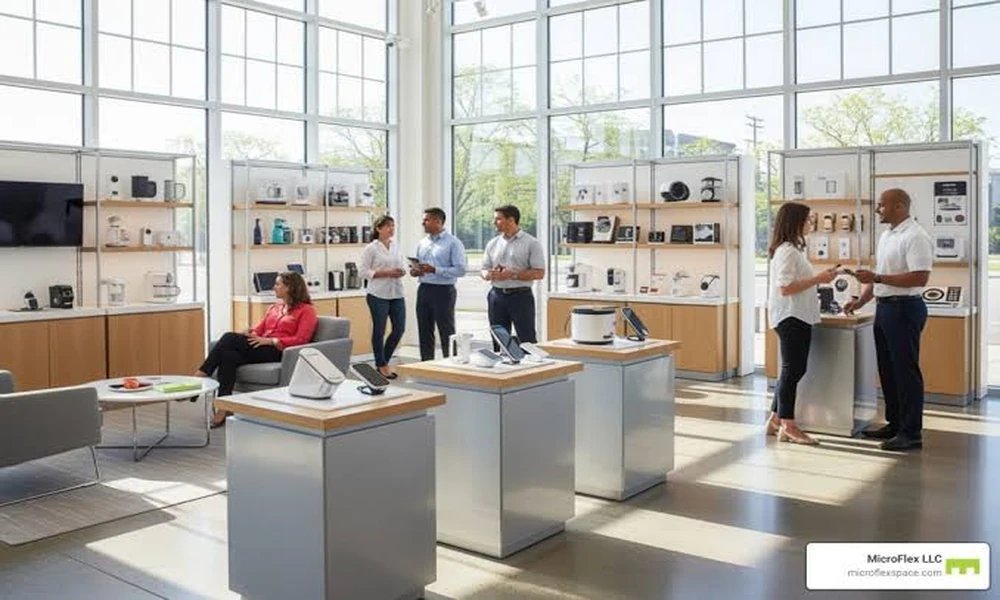
Title: Photography for Design Open Houses and Showroom Events
A design open house or showroom event is both a live gathering and a presentation of a carefully built environment. Photography must show the space before it fills, the details that express the design, and the way guests use it without reducing the event to wide empty rooms or crowded snapshots. The right coverage plan separates architectural priorities from guest experience, then gives both a place in the final gallery.
Photograph the completed environment first
Schedule a controlled window after styling and cleaning but before check-in. Capture exterior approach, entrance, complete room relationships, focal installations, material transitions, lighting features, signage, and details named by the design team. Identify anything temporary, unfinished, proprietary, or supplied by a partner.
Plan around daylight and programmed lighting. A room may need one treatment to explain layout and another to show evening atmosphere. Confirm which fixtures should be on, whether window views matter, and how reflective surfaces affect camera positions. The controlled set becomes the accurate design record.
Prepare the space for the camera without erasing its function. Remove packing materials, personal information, temporary cables, and unapproved signage, but retain objects that explain scale and use. Assign one design representative to approve styling adjustments. When several collaborators change a room independently, continuity breaks and the final set may no longer reflect an agreed installation.
Create a compact priority map rather than an exhaustive list of every surface. Mark the hero view, essential room relationships, signature materials, commissioned pieces, and details that distinguish the project. Include correct terminology for each item. That map helps the photographer invest time where the design story is strongest while still noticing unplanned compositions.
Show how people activate the design
Once guests arrive, shift from empty perfection to believable use. Look for arrival, circulation, conversation, product interaction, demonstrations, hospitality, and moments when a designer explains a decision. Choose angles that preserve the room while showing scale and movement.
Coverage through Indigo Visual’s event photography services can be planned around these transitions. Ask how the photographer will move from controlled interiors to live interactions without missing a formal welcome, tour, or reveal.
Guest density changes the apparent scale of a room. Plan a few wider scenes early, then follow smaller conversations and demonstrations as attendance builds. Avoid directing people into circulation routes or asking them to repeat a private exchange. A host can introduce the photographer to designers and collaborators who are comfortable participating in a brief portrait or explanatory moment.
Credit collaborators accurately
Design events often involve architects, interior designers, fabricators, artists, suppliers, stylists, developers, and venue teams. Create a roster with correct names and the installations or moments connected to them. Mark required partner images without assuming that a logo close-up adequately represents the work.
Permissions and licensing should be clear before broad distribution. Artwork, branded products, private residences, and distinctive installations may have conditions. Record the intended editorial, social, portfolio, or commercial uses. A future publisher should not have to reconstruct those rights from event invitations.
Credit data should travel with the selected images. Use a shared list with project name, location, design disciplines, manufacturers where required, artwork credits, and preferred public titles. Confirm which collaborators need approval and which only need notification. Accurate credits strengthen editorial usefulness and prevent an urgent release from overlooking the people whose work is visible.
Prepare for media and rapid release
Choose a small first-delivery set: a strong room overview, a defining detail, a guest interaction, a key person or presentation, and required collaborators. Provide captions and credits with the files. If media require high-resolution images, confirm format and transfer before the event rather than compressing a social selection and calling it press-ready.
For a larger brand library, Indigo Visual’s photography and videography services can prompt a discussion about adding walkthrough motion, designer interviews, or product demonstrations. These should have their own sound and timing plan rather than being improvised while still photography is completing the room record.
Set a realistic rapid-edit cutoff. The first selection should pass checks for focus, colour, confidential information, guest restrictions, and partner requirements even when it is small. Tell communications teams when captions and credits will arrive, because a fast photograph without reliable context is not ready for press or a collaborator’s channel.
Edit for both design and event stories
Organize the final gallery into environment, detail, people, program, partners, and behind-the-scenes material. Check vertical and horizontal options, copy space, and visual variety. Remove near duplicates and frames where temporary clutter or unflattering crowd compression hides the intended experience.
Keep notes identifying spaces, designers, products, and restrictions. Flag images that show temporary layouts or people without broad release. A well-described archive can support design coverage months later without making the event team the permanent interpreter.
Review the balance with both the design lead and event communicator. The former can catch an inaccurate material description or misleading angle; the latter can see whether the program and guests are represented. Their approvals address different risks and should be consolidated before the gallery is distributed to a wider partner group.
The strongest open-house photography preserves two truths at once: the environment was thoughtfully designed, and people found a real way to inhabit it. Plan separate moments for each, then edit them into a gallery that lets the relationship remain visible.
A clear archive then keeps both stories available for later editorial use.