

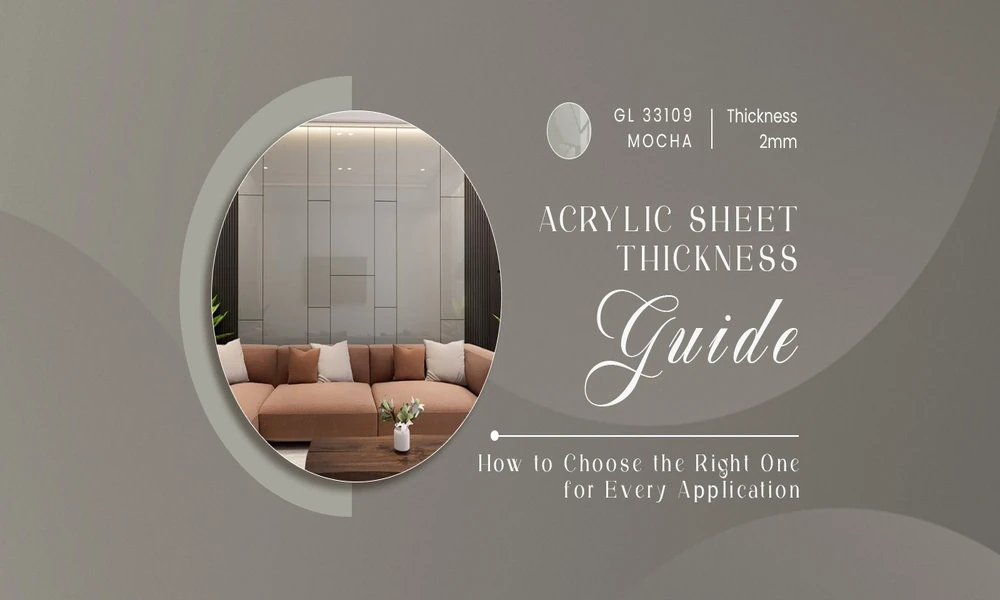
Planning to choose an acrylic sheet as surface material for your kitchen shutter, wall panel or partition, but unsure what are important aspects you must check when choosing the right sheet? Here is a piece of information – when choosing a surface finish material, it isn’t only the colour and finish, but also the thickness of the sheet that can significantly play an important role in determining its sturdiness, handling required, ease of installation and overall appearance. Following is an acrylic sheet thickness guide that helps homeowners understand what are different aspects to consider when selecting the choice of acrylic mm for kitchen shutters or any other application.
H2 Why Acrylic Sheet Thickness Matters
Acrylic sheet thickness not only influences the durability and stability, but also impacts the visual appeal, rigidity, ease of handling, resistance to bending and how the sheet performs after installing. The right thickness acrylic panels chosen must be dependent on where it is to be used, how large the panel or shutter is, and how much everyday handling would be experienced. One can go for thin sheets when it comes to decorative applications and choose thicker sheets where greater rigidity and sturdiness is required, like in larger or frequently handled surfaces. However, choosing the thickest available option is not always necessary or practical.
H2 Choosing Acrylic Thickness for Kitchen Shutters
The shutters of the kitchen are opened and closed frequently, and hence stability becomes very important. While choosing the acrylic mm for kitchen use, one needs to keep in mind the dimensions of the shutters, the substrate beneath them and the hardware that is used.
A good thickness of acrylic can strike the right balance of aesthetics and strength in case of ordinary cabinet shutters.
H2 Acrylic Thickness for Panels
Panels for walls and furniture are not always subject to the same needs as kitchen shutters. Panels used for decoration, which are not moved much and are subjected to few impacts can be made from thinner acrylic sheets. While choosing the right thickness acrylic panel, one must take into account the size of the panels, the support provided and the functionality.
H2 Choosing Thickness for Partitions
Another application of acrylic is the use in interior partitions where a modern look and brightness are required. In this case, the thickness would depend on the size of the partition, its framing or support and how much movement will be encountered.
In bigger partitions, choosing a proper thickness may ensure stability. The panel also needs to be properly supported considering the movement it will encounter.
H2 Factors to Consider Before Selection
Before finalizing an acrylic sheet thickness, you will need to consider:
• The purpose and usage rate
• The size of the entire sheet or shutter
• The type of base material and support system
• Installation method
• Necessity for durability and aesthetic appearance
• Edge preparation and fabrication methods
H2 Conclusion
There is no universal thickness that is perfect for all interior uses. Shutters and panels used in kitchens, as well as decorative partitions are used differently and therefore, the thickness must always be chosen depending on the particular task. An acrylic sheet thickness guide may come in handy for carpenters and interior specialists to analyse application, size, support system and installation method before purchasing the sheet. Products by brands like Royale Touché provide various interior applications of acrylic sheets.