

For generations, judging whether a roof was doing its job was relatively straightforward. If it kept water out, remained structurally sound and survived the British weather for several decades, it was generally considered successful.
Solar power is changing that calculation.
A growing number of British homes and commercial buildings now have photovoltaic panels sitting above their roof coverings. Others are likely to follow. What was once an unusual addition has become a familiar feature of residential streets, warehouses, schools, offices and industrial estates across the country.
That means we need to start thinking differently about the relationship between roofs and solar technology.
The question is no longer simply whether a roof can physically accommodate a few panels. Building owners increasingly need to consider whether the roof beneath them is suitable for supporting an installation expected to remain in place for decades.
Installing solar panels onto the wrong roof can create an expensive problem that has nothing to do with the panels themselves.
The roof should come before the solar panels
It sounds obvious, but the condition of the existing roof should be one of the first considerations before installing solar.
Unfortunately, that does not always happen.
Solar installers understandably concentrate on electricity generation. They assess orientation, shading, available space and likely performance.
The roof covering can become secondary.
That is risky because solar panels typically represent a long-term installation. If the roof beneath them needs major work several years later, accessing it may require panels and associated equipment to be temporarily removed.
Suddenly, what would have been a straightforward roofing project becomes considerably more complicated.
Assessing the remaining life of the roof before installation can prevent that situation.
An ageing roof is not necessarily an unsuitable roof
Age alone should not determine whether solar panels can be installed.
A well-maintained older roof may remain in excellent condition. A relatively recent roof can have serious defects if materials or workmanship were poor.
What matters is condition.
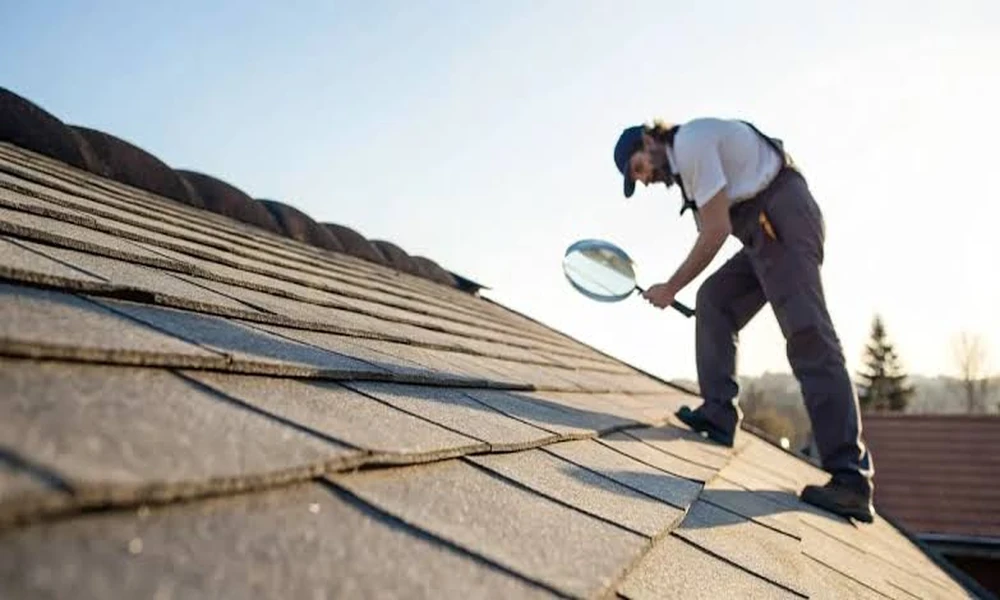
Tiles should be checked for deterioration and damage. Flashings and roof junctions deserve attention. On flat roofs, the waterproofing system should be assessed for signs of ageing, previous repairs and persistent ponding.
If substantial roofing work is likely within the foreseeable future, carrying it out before installing solar often makes considerably more sense.
For homeowners uncertain about the condition of an existing roof, an assessment from an experienced residential roofing contractor can help separate genuine concerns from unnecessary replacement.
Solar changes how a roof needs to be maintained
A roof without solar panels is generally straightforward to inspect.
Once an array has been installed, access changes.
Some sections of roof covering become less visible. Routes across flat roofs may become restricted. Leaves and debris can accumulate beneath or around equipment.
None of these issues make solar inherently problematic.
They simply mean maintenance needs to be considered differently.
Installations should allow sensible access to outlets, gutters and other areas likely to require attention during the lifespan of the roof.
On larger commercial buildings, this becomes particularly important. A poorly planned array can make routine roof inspections unnecessarily difficult for decades.
Fixings deserve more attention than they receive
The panels themselves attract most of the attention, but the method used to secure them to the building matters enormously.
On pitched roofs, mounting systems need to transfer loads safely into the roof structure without compromising weather protection.
Poor detailing around fixings can introduce weaknesses that did not previously exist.
The same principle applies to flat roofs, although installation methods vary considerably depending on the roofing system and solar design.
Any penetration through a waterproof covering deserves careful thought.
A roof may have remained completely watertight for twenty years. Introducing dozens of poorly detailed fixing points can change that remarkably quickly.
Good solar design therefore requires cooperation between electrical, structural and roofing expertise rather than treating each discipline independently.
Weight is only part of the structural question
Homeowners sometimes focus entirely on whether their roof is strong enough to carry the weight of solar panels.
That is certainly relevant, but it is not the only structural consideration.
Wind creates forces too.
Panels installed above a roof surface can experience uplift, particularly around exposed areas and roof edges. Mounting systems therefore need to account for the forces likely to act on the installation throughout its life.
Commercial buildings present another challenge because arrays can cover substantial areas.
Large flat roofs may already contain air-conditioning equipment, plant, rooflights, walkways and other infrastructure. Solar becomes another component competing for space and placing demands on the structure.
The roof needs to be considered as a complete system.
Flat roofs offer enormous solar potential
Large flat roofs are particularly attractive for solar installations.
Warehouses, offices, retail buildings and industrial premises can provide huge areas that would otherwise have little productive use.
Panels can often be positioned at an appropriate angle without significantly changing the appearance of the building from ground level.
But the roofing system underneath remains fundamental.
A commercial roof expected to support solar equipment needs reliable waterproofing, sensible drainage and appropriate maintenance access.
If refurbishment is already required, coordinating the roofing and solar projects can be far more efficient than treating them as separate jobs several years apart.
Businesses considering rooftop energy generation should therefore include the existing roof within any assessment of future commercial roofing requirements.
Solar panels do not stop roofs needing drainage
One misconception worth addressing is that covering parts of a roof with solar somehow protects the surface beneath.
It can provide shade, but it does not eliminate the need for effective drainage or maintenance.
Rain still lands on the panels and surrounding roof.
Leaves still fall.
Moss still develops.
Outlets still become blocked.
On flat roofs, the layout of an array can influence how easily maintenance teams reach drainage points.
Panels can also create areas where windblown debris accumulates.
Designing access routes before installation is far easier than discovering several years later that an important outlet sits beneath equipment that is difficult to work around.
Surrey properties present some particular challenges
Solar potential across Surrey is considerable, but the county’s housing stock is exceptionally varied.
Modern developments sit alongside Victorian houses, substantial detached homes, converted properties and much older buildings.
That means there is no universal approach.
A straightforward modern pitched roof may present few complications.
An older property around Guildford, Epsom or Leatherhead could have multiple roof levels, extensions, dormers and mature trees creating significant shading.
Large homes around areas such as Cobham and Weybridge may offer extensive roof space but also feature more complicated roof geometry.
The most obvious roof elevation is not necessarily the most appropriate place for an array.
Solar design needs to work with the building rather than simply occupying whichever surface appears available.
Roof repairs become more complicated after installation
Imagine discovering a leaking tile beneath a solar array.
The roofing repair itself may be simple.
Accessing it might not be.
Depending on the installation, panels may need to be removed temporarily before the roofer can reach the affected area.
This introduces another contractor, additional labour and potentially electrical work into what might otherwise have been a routine repair.
That is why preventative roof maintenance becomes more valuable once solar has been installed.
Checking vulnerable areas beforehand and dealing with ageing components can reduce the likelihood of disruptive repairs later.
Flat roofing materials need to match the future use
The growth of solar is also changing how some new and refurbished flat roofs are specified.
It is no longer enough to consider what the roof needs today.
Building owners increasingly need to ask what might be installed on it during the next twenty or thirty years.
Solar panels may be one possibility. Green roofing, additional mechanical equipment or upgraded insulation could be others.
Modern waterproofing systems such as Alwitra Evalon can form part of flat and low-pitched roofing specifications where long-term performance and careful detailing are important considerations.
Whatever system is selected, the principle remains the same – future use should influence today’s roofing decisions.
The cheapest sequence is usually roof first, solar second
There is an understandable temptation to move quickly when financial incentives, energy costs or installation deals make solar attractive.
But sequencing matters.
If a roof needs substantial work within the next few years, installing solar first can create avoidable expense.
Removing panels, completing roofing work and reinstalling the equipment means effectively paying twice for parts of the project.
Carrying out necessary roof repairs or replacement first creates a sound platform for the solar installation and allows both systems to begin their useful lives together.
It is a simple principle, but one that can save significant money.
A good roof now needs to accommodate change
Solar technology highlights a broader shift in what we expect from buildings.
Roofs are no longer passive surfaces whose only purpose is keeping out the weather.
Increasingly, they generate electricity, support mechanical equipment, improve biodiversity, manage rainwater and contribute to energy efficiency.
That does not make traditional roofing principles less important.
It makes them more important.
The waterproofing still needs to work. Water still needs somewhere to drain. Flashings still need to remain secure. Materials still need to withstand decades of temperature changes and British weather.
Solar panels simply add another layer of responsibility.
As rooftop electricity generation becomes increasingly common, the definition of a good roof is therefore changing.
It is not just one that performs well today.
It is one capable of supporting what the building might need tomorrow.
