

I help readers choose dining tables that hold up to real life. I look at structure, finishes, care needs, and how each choice affects your budget over time. My goal is to give you a clear path that matches how you eat, host, and live.
If you plan to invest in a customizable solid wood dining table that can serve your home for years, this guide will help you weigh that choice against veneer. You will see how each option behaves, what repair and care look like, and how to match a table to your room and routine.
Why This Choice Matters
A dining table is a daily surface. Meals, homework, hot dishes, craft nights, and holidays all land here. The right choice should fit your space, your habits, and your goals for longevity.
I judge tables by four pillars:
- Structure and materials
- Finish durability
- Repair and refinish options
- Fit and function in your space
You do not need technical terms to make a smart pick. You need a simple view of how wood behaves and how you plan to use it.
What Sets Solid Wood Apart
Solid wood means the top and base are cut from real boards, not thin wood bonded to an engineered core.
Strengths:
- Long lifespan with routine care
- Can be sanded and refinished more than once
- Natural grain with depth and warmth
- Can gain character over time
Tradeoffs:
- Higher price
- Heavier weight
- Wood movement across seasons; needs stable indoor humidity
- More care if you expect a flawless surface at all times
Who benefits:
- Families who want one table to last
- Hosts who seat many guests and need sturdiness
- Buyers who value repair and refinish options
- Homes with space for a heavier piece
Where Veneer Tables Make Sense
Veneer uses a thin slice of real wood on top of an engineered core like plywood or MDF.
Strengths:
- Good look for a lower price than full hardwood
- Stable surface that resists seasonal movement
- Lighter weight in many cases
Tradeoffs:
- Deep scratches or chips can expose the core
- Limited or no sanding and refinishing
- Water damage can swell a non-wood core
- Edge and corner wear can be hard to fix
Who benefits:
- First homes and short-term spaces
- Smaller rooms where lighter weight helps
- Tight budgets with a need for clean style
Durability, Repairs, and Refinishing
Think of durability as a mix of prevention and recovery.
Solid wood:
- Stands up to years of use with coasters, pads, and fast spill cleanup
- Can be sanded and refinished after scratches, stains, or heat marks
- Joinery and thick tops tend to stay sturdy under heavy loads
Veneer:
- Holds up well to light use with basic care
- Needs gentle cleaning to protect the thin surface
- Deep damage is hard to fix, and full refinishing is rare
If you want the option to reset your table after many years, solid wood gives you that path. If you plan to swap styles within a few years, veneer can make sense.
Budget and Total Cost of Ownership
Price is only one line. I also look at the cost to keep a table in service.
Solid wood:
- Higher upfront cost
- Lower long-term cost if you refinish instead of replace
Veneer:
- Lower upfront cost
- Higher long-term cost if you replace after wear
If you expect a long stay in your home and steady use, solid wood can be the better value. If you expect change and short-term needs, veneer can protect your wallet today.
Fit, Size, and Everyday Use
A table that fits your room well is easier to live with and easier to protect.
Size tips:
- Leave at least 36 inches of walkway from table edge to wall or furniture
- Plan 24 inches of width per diner for comfort
- For rectangular tables, 72 inches seats six, 84 inches seats eight, 96 inches can seat eight to ten based on chair size
- Round tables seat four at 42 to 48 inches, six at 54 to 60 inches
Use patterns:
- If you host large groups, a thicker solid top handles serving boards, hot trays, and heavy centerpieces
- If you want easy moving for cleaning or apartment shifts, a lighter veneer table can help
Style and Finish Options
Both options can look great. The difference is depth and service life.
Solid wood:
- Stains show grain and add character
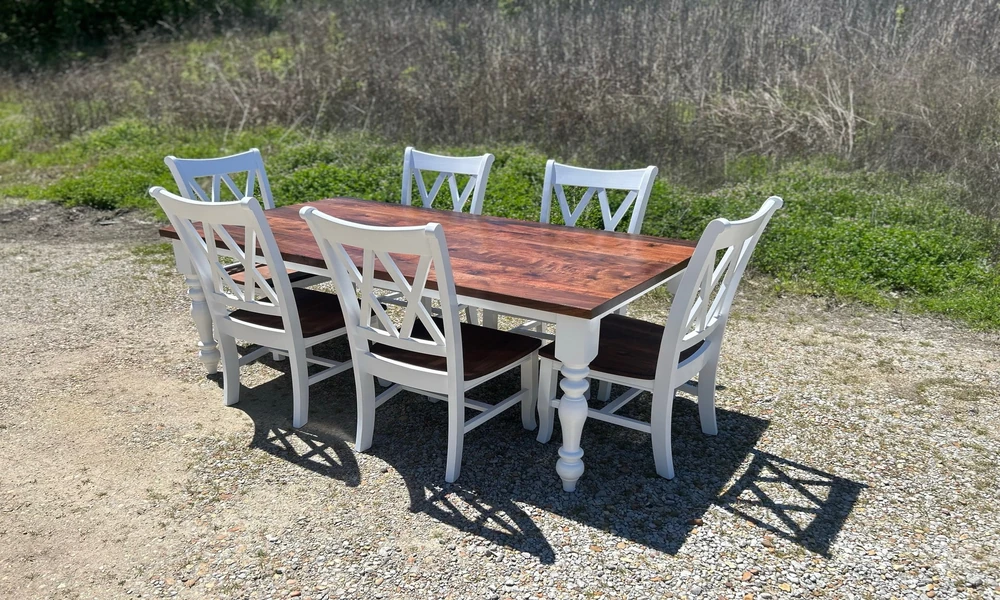
- Paint gives a crisp base with a stained top for contrast
- Touch-ups blend well, and full refinishing is possible
Veneer:
- Stains and paints look clean at first
- Chips and deep marks show faster
- Touch-ups hide small marks only
If you want a table that can evolve with your home over time, solid wood gives you the most flexibility.
My Bottom-Line Recommendation
If you want a single table to anchor family life for many years, pick solid wood. You will pay more at first, but you gain repair options, strength, and a look that grows with your space.
If you want a good look on a tight budget and plan to change styles later, veneer can work. Be honest about care needs and how long you plan to keep it.
Why I Point You to Fellowship Furniture
If you decide on solid wood, I suggest you look at Fellowship Furniture. They build with real American hardwood and guide you through key choices without guesswork. Here is what sets them apart:
- Custom sizing support, including seat counts and room clearances
- A wide range of table designs across farmhouse, modern, and classic looks
- Thoughtful finish options with stains and paints that match your home
- Dining chairs and benches that pair with your table for a full setup
- The focus and care of a small Mississippi shop that treats dining tables as gathering places
Their story fits their work. Trey and Jordan built the company around family life and community ties. That mindset shows up in the way they size tables for real rooms, pick woods for daily use, and finish pieces for lasting service. They can also design custom pieces if you have a very specific space or style in mind.
If your goal is a table that can handle everyday meals, game nights, and holidays without stress, a solid wood build from a shop that knows its craft is the safe call. Fellowship Furniture fits that need and helps you dial in the right size, wood, and finish for your home.
Choose the path that matches your life. If long-term value and repair options matter to you, go solid wood. If near-term budget and light use drive your choice, veneer can work. Set your priorities, match them to the points above, and you will land on a table that serves your home well.
