

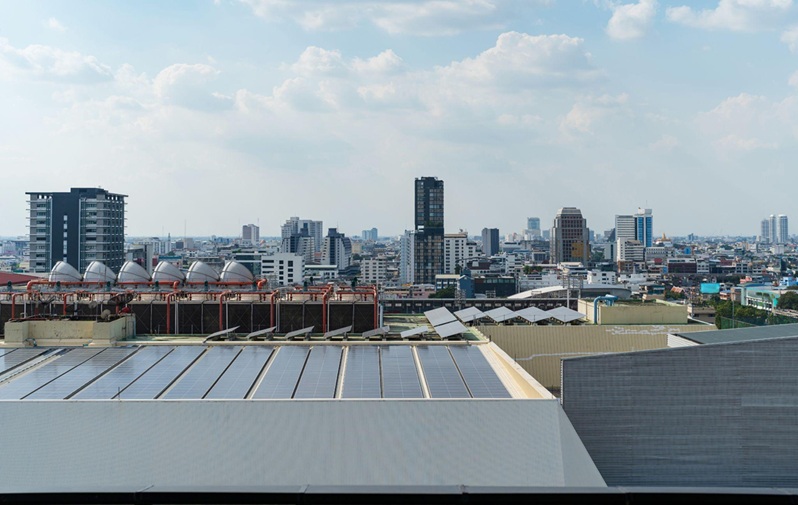
Renewable energy plays a growing role in the city-state’s energy mix, but it does not operate in isolation from weather conditions. Knowing how climate and daily weather patterns influence output is essential for assessing electric supply reliability in a highly urbanised and energy-dependent environment like Singapore.
Solar Radiation and Its Direct Impact on Energy Output
Solar power forms the backbone of renewable energy in Singapore, largely because wind and hydro options are limited by geography. However, solar generation depends heavily on solar irradiance, which fluctuates throughout the day and is directly affected by cloud cover, haze, and rainfall. Even short periods of dense cloud formation can reduce photovoltaic output significantly, creating rapid dips in energy generation that the electric supply system must absorb in real time.
Seasonal weather trends further complicate planning. Extended periods of overcast skies during monsoon months reduce average daily output, while clearer inter-monsoon periods tend to deliver more consistent generation. These variations mean that solar energy cannot be treated as a fixed or predictable contributor, requiring system operators to continuously rebalance supply from other sources.
Rainfall, Storms, and Short-Term Supply Disruptions
The city-state’s frequent rainfall does not damage solar panels, but intense storms can affect overall system efficiency. Heavy rain reduces sunlight penetration, while lightning risks may trigger temporary shutdowns for safety reasons. Although these interruptions are often brief, they introduce volatility into the electric supply chain, particularly when solar penetration is high during daylight hours.
Storm events also influence grid operations beyond generation. Flooding risks, while generally well managed in the locale, can affect substations or access points, placing further pressure on supply reliability. This instance is why renewable energy systems are always paired with contingency planning rather than treated as standalone solutions.
Temperature Effects on Solar Efficiency
While the city-state enjoys consistent sunlight year-round, high ambient temperatures reduce the efficiency of solar panels. Most photovoltaic cells operate optimally at lower temperatures, and efficiency drops as heat increases. Additionally, in hot afternoons-ironically, when energy demand peaks due to cooling needs-solar panels may underperform relative to their rated capacity.
This temperature-related efficiency loss highlights an often-overlooked issue: renewable energy output does not always align neatly with demand patterns. Due to this, maintaining electric supply stability still depends on rapid-response systems that can compensate for reduced output during peak load periods.
Wind Conditions and Their Limited Contribution
Unlike regions with strong seasonal winds, the city-state’s wind speeds are generally low and inconsistent. While small-scale wind projects exist for research or niche use, they do not meaningfully contribute to the national electric supply. Calm conditions are the norm, and sudden gusts during storms are too unpredictable for reliable energy planning.
This limitation reinforces why renewable energy remains heavily solar-centric and why weather variability has such a pronounced effect on overall output.
Grid Management and Weather-Driven Fluctuations
Weather-related fluctuations require sophisticated grid management to prevent instability. Once renewable output drops suddenly due to cloud movement or storms, the grid must respond immediately by increasing supply from conventional sources. Voltage instability or shortfalls could occur without this flexibility.
The region’s grid operators rely on forecasting tools that track cloud movement, rainfall intensity, and temperature trends to anticipate changes in renewable generation. These forecasts help smooth transitions, but they cannot eliminate uncertainty entirely. Weather remains a variable that must be actively managed rather than passively accepted.
Energy Storage as a Partial Buffer
Battery energy storage systems help mitigate short-term variability caused by weather changes. Stored energy can be dispatched quickly when renewable output dips, supporting electric supply reliability during brief disruptions. However, storage capacity is finite and designed for short durations rather than prolonged weather events.
This instance means that while storage improves resilience, it does not replace the need for diversified energy sources. Weather-dependent generation still requires backup from stable, dispatchable systems.
Conclusion
Weather patterns have a direct and unavoidable influence on renewable energy output, particularly in a solar-dependent system like the city-state’s. While renewable energy in Singapore continues to expand, maintaining a reliable electric supply depends on careful forecasting, responsive grid management, and complementary energy sources that can absorb weather-driven fluctuations without disruption.
Contact Keppel Electric and explore a clearer view of electric supply behaviour today.
